Outline, attachment and care
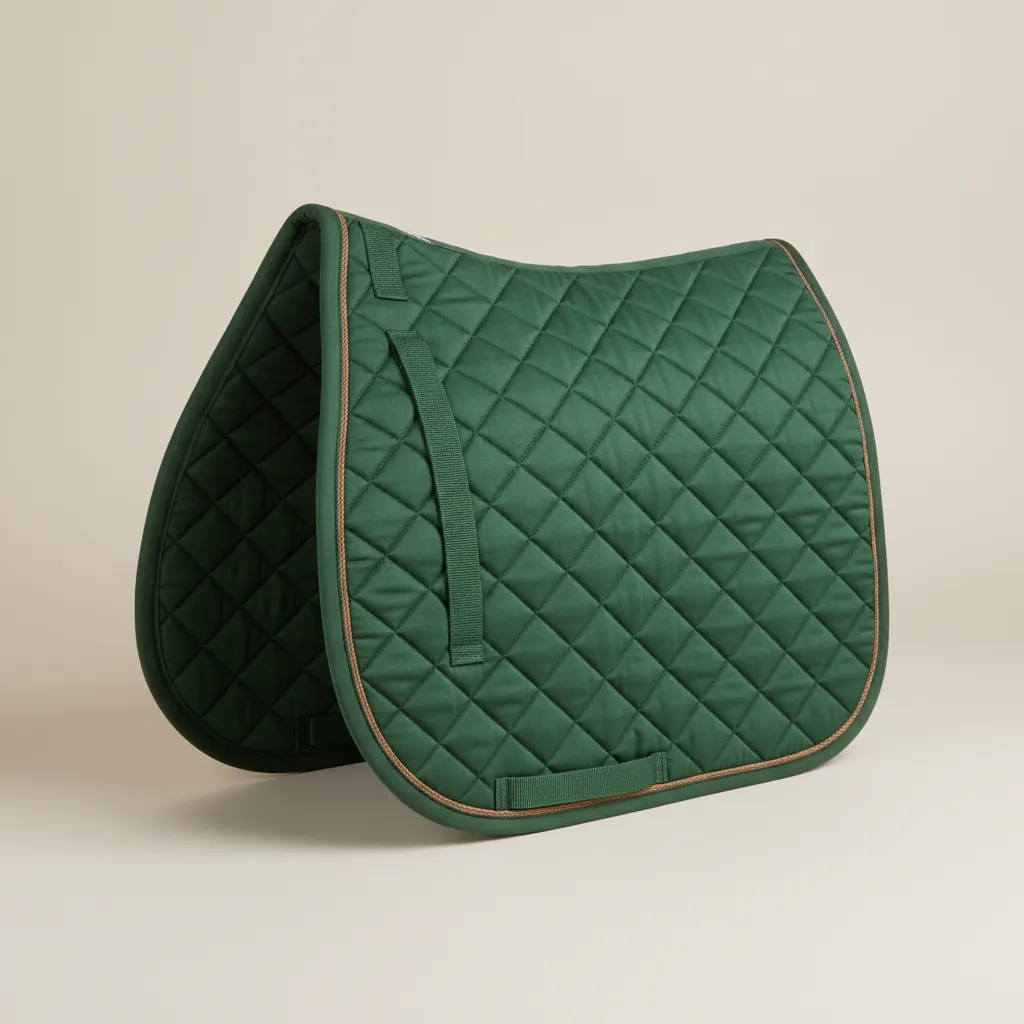
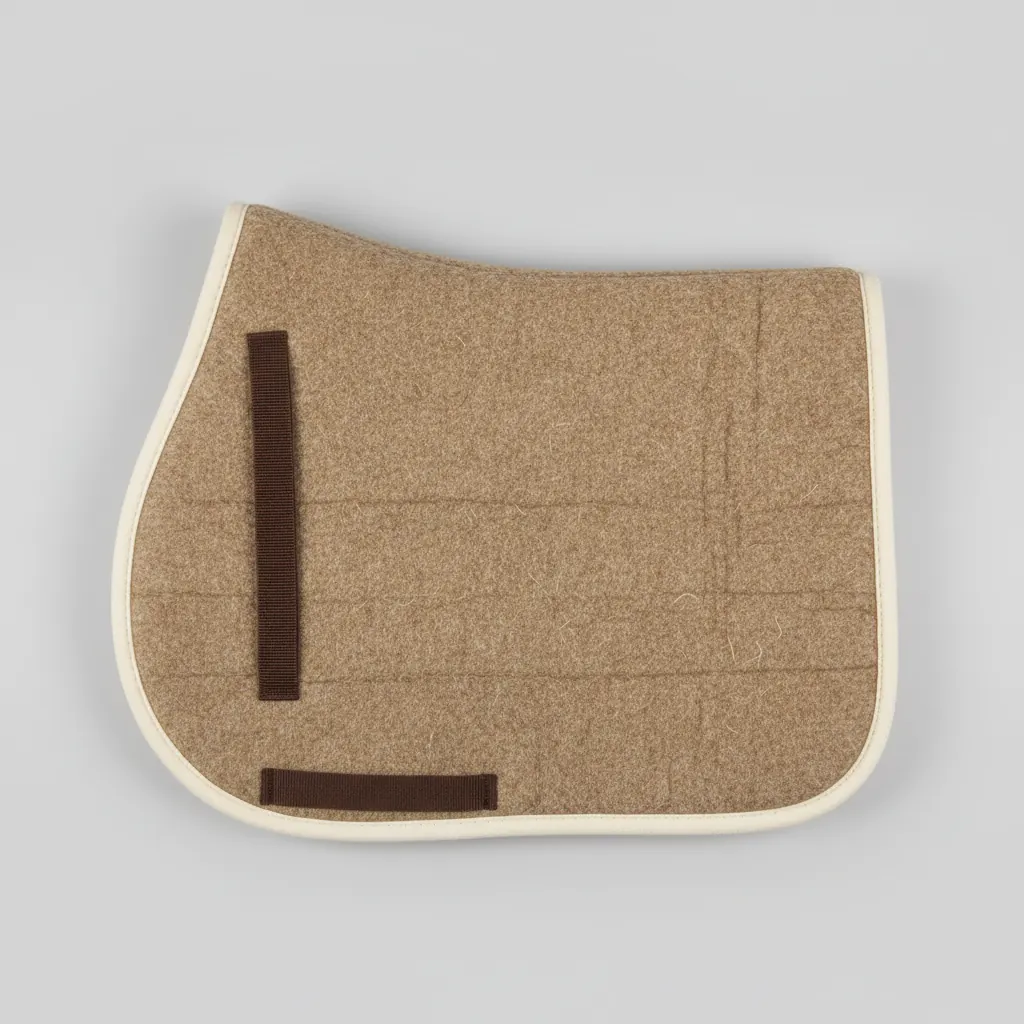
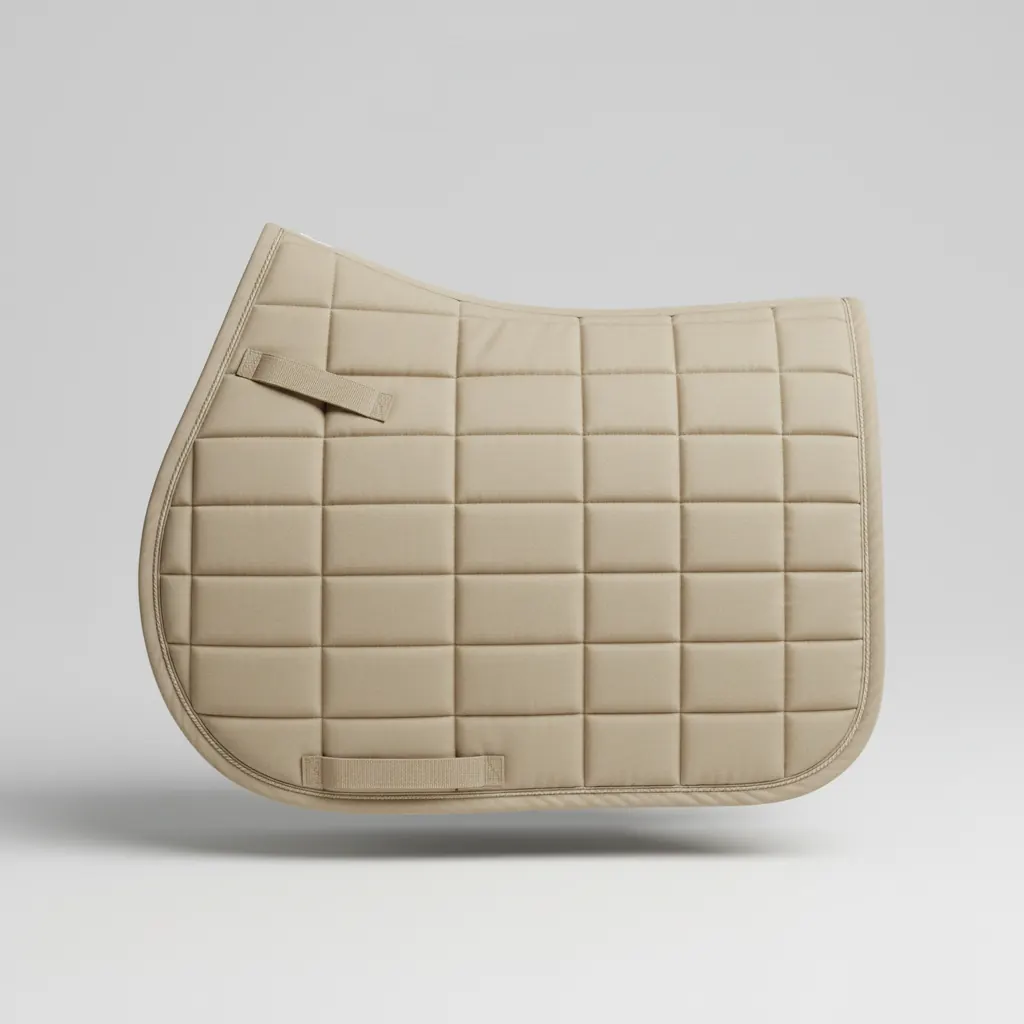
Longer dressage flaps need a different outline from a rounded everyday pad, and this oat twill design makes that distinction visible before purchase. Its polyester-cotton outer is channel quilted over polyester fill, with a cotton underside and a shaped upper line. The lower portion extends in a straighter profile to follow an appropriate dressage saddle, while the girth-loop interface sits apart from the spine area. Compare the Cob dressage and Full dressage options with your present saddle coverage. Neither label supplies a universal fit measurement. Place the pad on the horse, position the saddle above it and draw the upper cloth gently into the channel before checking the flap edges. Avoid pulling the whole pad down simply to gain more visible coverage below the saddle.
An oat surface makes loose hair and dirty edges easy to spot, so inspect the underside as carefully as the more visible twill. Undo the attachment arrangement before removing the pad, clear hair from the quilting channels and let both faces dry with air circulation. Washing instructions should come from the item care label; do not assume the blend accepts the same heat as a plain cotton towel. Choose this cut when your saddle has the longer, straighter flap that its shape is intended to accompany. Buyers with a forward-cut jumping saddle should compare the close-contact alternative instead of relying on appearance alone. A good outline still cannot correct an unsuitable saddle, and persistent pressure marks warrant professional assessment before another ride.