01
Record an outline rather than a breed
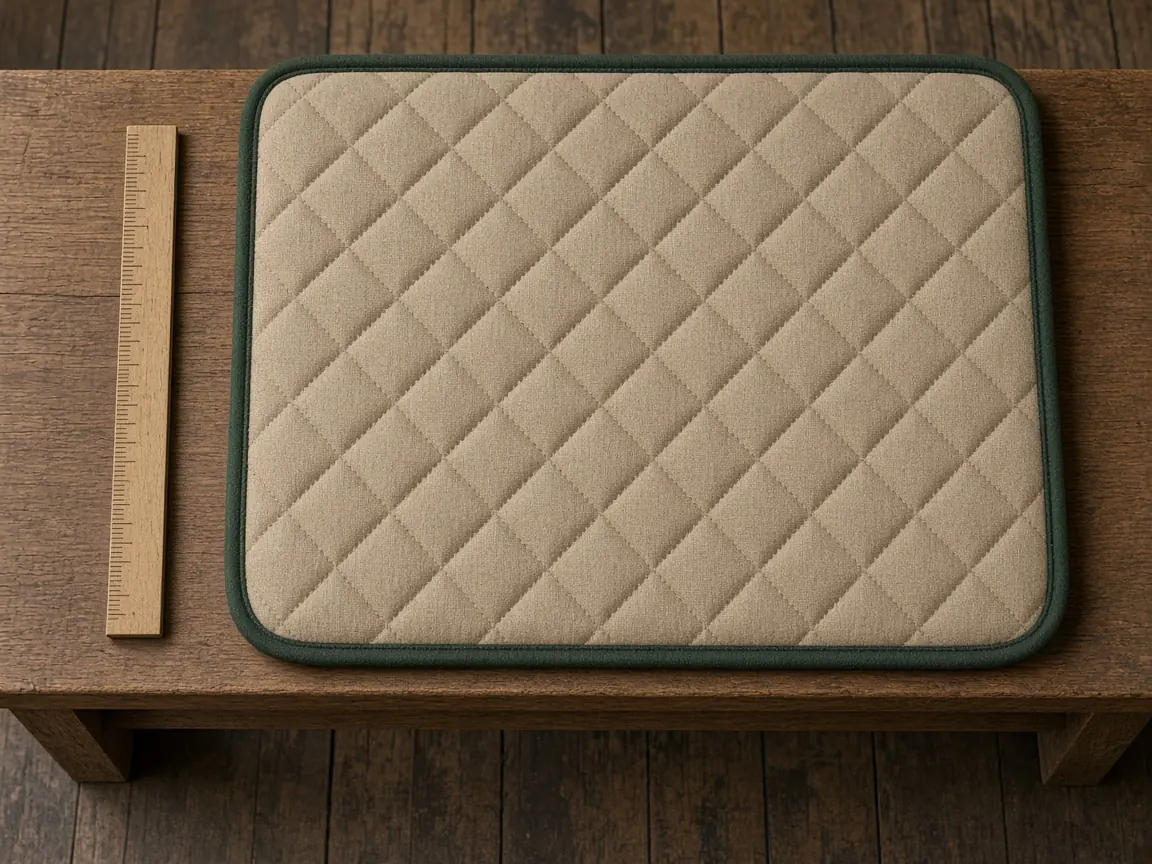
Put an existing pad on a clean flat surface and note its top-line length, deepest flap drop and the area actually occupied by the saddle. A ruler in a photograph should sit in the same plane as the fabric, with the whole outline visible. Send the saddle style as well as the measurement. A general-purpose label does not tell us how forward the flap is, and an advertised seat size alone cannot establish coverage of the complete underside.
Lay a headcollar flat without stretching the straps. Record the current crown setting, nose circumference setting and spare range at each adjustment point. Explain whether the reference item is comfortable in use or is itself the reason for replacing equipment. Pony, Cob and Full are format names; they are not published centimetre dimensions in this catalogue. Ask for the relevant item detail before ordering if a close tolerance is important.
02
Compatibility checks worth keeping separate
Saddle and pad connection
Identify how the girth loops and front tabs sit against your tack. A loop that reaches only by pulling the pad sideways indicates an arrangement to reassess. Do not make a new attachment hole or remove binding to force a fit.
Halter and lead interface
Examine the lower ring and select a lead attachment suited to it. Leads are not included with these halters. The presence of a ring does not specify permitted tying loads or a safe release arrangement, which require their own assessment.
Independent product pairings
Buying a pad and halter together does not create a mechanical system. Each must fit its own interface, and each has its own maintenance requirements. A compatible colour has no bearing on pressure clearance or head adjustment.
03
Keep the uncertain dimension visible
Send the measurements you have, the catalogue option and the clearance you need to establish. We will not infer missing centimetres from a format label.
Send a measurement enquiry